Have any question?
Text or Call (954) 573-1300

Text or Call (954) 573-1300


At first glance, cybersecurity might seem incredibly complicated and difficult to understand, but even a baseline understanding of some of the principles of cybersecurity can go a long way toward protecting your business. Let’s discuss some of the common-sense ways you can keep your business secure, even if you don’t have an internal IT department to ask for help from.
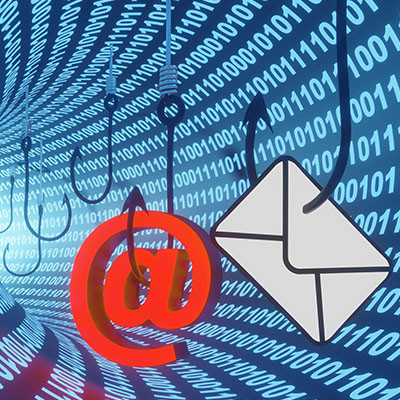
How often do you get emails from individuals claiming to be working with a business who wants to do business with yours or sell you a product, completely unsolicited and even perhaps a bit suspicious? These types of messages can often land small businesses in hot water, as it only takes one phishing email landing in the wrong inbox at the wrong time to put your business in jeopardy.

This past year saw a dangerous 86% increase in the most dangerous types of malware out there, so we want to ask you an important question: are you ready to protect your business from the different types of threats you might encounter? We know a technology solution that might help this mission along, and we want to share it with you today: artificial intelligence.

It’s easy to use the terms “patches” and “updates” as if they mean the same thing, and they are often used interchangeably within the same context. However, understanding the difference between the two can make a world of difference in terms of how you approach implementing each of them. We’re here to clear things up a bit and help you better understand the patches and updates you deploy on a month-to-month basis.

In today’s business, sharing files is easy and something many workers take for granted. Unfortunately, not all file-sharing methods are secure. When efficiency is prioritized over security, it can often lead to extremely troublesome situations. For this week’s tip, we thought we’d go through a half dozen practices you can take to ensure your files get to where you need them to get safely and securely.
Technology has come a long way, but so too have the threats which leverage it to their advantage. How have the cyberthreats which target your organization evolved over time, and what can you do to protect yourself?

How quickly do you think it takes for a hacker to react to the disclosure of bugs and vulnerabilities? According to industry experts, the time for security professionals to react to zero-day threats and vulnerabilities might be decreasing. Is your organization prepared to act when important vulnerabilities like these are disclosed?

Chances are pretty good that, by this point, you’ve heard of burnout—maybe you’ve even suffered from it before yourself—but, just in case you’re a remarkably lucky human being, it’s the phenomenon where your employees become disengaged to the point where their performance suffers. While this isn’t good in any facet of your business, it can be especially damaging in terms of your security.
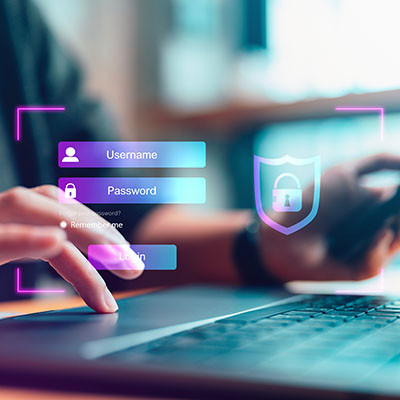
Passwords are just one part of a comprehensive security strategy, but they are a crucial one. You must make sure that you are investing adequate time and effort into making sure your passwords are secure. This is easier said than done, but by the end of today’s short blog article, you’ll have all the information you need to craft excellent passwords for your accounts.

Insurance is a great asset, should you ever need it… including where your business technology is concerned. If you weren’t aware, there is a form of insurance—cyber insurance—that you can purchase in case your business suffers from a data breach.
Is this additional form of insurance worth the investment? Absolutely.

When we think about cybersecurity, we usually think about protecting our computers from viruses, right?
I’d imagine a few of our older readers remember a time when you would go to the store and buy antivirus software that came in a big brightly-colored box with a CD in it each year.
As you probably already know, things aren’t as simple anymore.

Anyone who has a mailbox or an email knows all about junk mail. We all receive Publisher’s Clearing House entries, calls about your car’s extended warranty, promotions for items and events that you swore that you discontinued by typing “STOP”, and just needless spam that you waste your time going through and deleting. We receive unsolicited messages every single day.

Mobile devices demand a special type of attention in order to ensure security. You want to ensure that your devices are protected as well as possible, but you also need to ensure that this does not come at the expense of your employees’ productivity or efficiency. We’ve put together a list of common security issues you might encounter when securing your mobile devices, as well as a couple of practices you can implement to work toward an adequate level of cybersecurity for your mobile infrastructure.

We understand that cybersecurity can be difficult to think about at times because of the terminology thrown around by industry professionals, but we want to do our part to help clear up some of the confusion. Today, we’re going to discuss the difference between vulnerabilities and exploits, as well as how your organization can do everything it can to ensure that both are minimized on your company network.

Despite hearing about a constant stream of cyberattacks over the past few years—most of which cause millions of dollars of damage to businesses—it might still be difficult for you to justify spending a lot of money on your business’ cybersecurity plans. There is a finite amount of capital to go around and many times CIOs and network administrators will be rebuffed by management when asking for money to spend on cybersecurity. Today, we thought we’d discuss three ways that you can spend on cybersecurity initiatives and not feel like you are throwing your money down the drain.

Your network security is of the utmost importance to your business for numerous, hopefully obvious reasons. However, there are a few errors that are easy enough to make that could easily be the proverbial monkey wrench in the works. Let’s go over what these network security faux pas look like, so you can resolve them more effectively (and don’t worry, we’ll discuss that, too).

Unfortunately, cybersecurity is a lot easier to reinforce in the office than it is when your team members are working remotely—and even then, it can be a serious challenge to maintain. However, let’s focus on the remote worker’s situation for a few moments and review a few best practices that can help a remote worker stay secure.
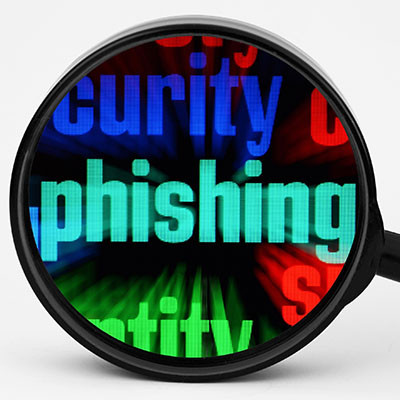
Phishing attacks can be scary to deal with, especially since it is not unheard of for staff members to not even know they are looking at one. To make sure your staff can identify and respond to phishing attacks in an appropriate way, we’ve put together this short guide to help you along the way.

When it comes to network security, businesses need all the advantages they can get, especially since cybersecurity as an industry is one which is rapidly adjusting and responding to an enormous amount of ever-changing threats. One way in which security researchers have attempted to subvert this security rat race is through artificial intelligence measures, a trend that promises to change the way businesses protect themselves more effectively.
For every level of business, cybersecurity is a big deal. For the enterprise, they deal with a lot of would-be attacks and need their staff to know how to respond if they are targeted. For the midsize business, the convergence of underwhelming IT support and a growing workforce can be the perfect storm. For the small business, a significant cyberattack could be the beginning of the end for their business. This is why, no matter what size your business is, you need to have a cybersecurity strategy in place that includes tools, monitoring, and protocol. This month, we have put together a list of considerations your business should note to keep your network and data safe.
Learn more about what L7 Solutions can do for your business.
L7 Solutions
7890 Peters Road Building G102,
Plantation, Florida 33324