Have any question?
Text or Call (954) 573-1300

Text or Call (954) 573-1300

In this blog, we do our best to give people the knowledge they need to protect themselves and their organizations while operating online. With all the digital tools that we all have come to rely on, it’s important to understand the result of a data breach on organizations and their customers. In today’s blog, we go through six of the most devastating data breaches that happened in 2023.

Social media scams are fraudulent schemes or deceptive activities that take place on various social media platforms. Users of Facebook, X (formerly Twitter), LinkedIn, and dozens of others have been victims of these attacks. These scams can target users of all ages and backgrounds, and they aim to exploit people's trust, curiosity, or lack of awareness. Social media scams come in various forms, and here are some common ones.

Maintaining network security has proven to be more difficult for organizations as time has gone on. Like the people trying to keep them out of networks they don’t have access to, hackers are increasingly using artificial intelligence (AI) to enhance their cyberattacks and achieve various malicious objectives. Here are some ways in which hackers are using AI.

When it comes to valuable data, hackers will go out of their way to try and steal it, placing businesses in dangerous situations. In particular, healthcare data is attractive to hackers, and considering how lucrative the prospect of healthcare data is, companies need to take extra precautions to protect it. But what is it about healthcare data that makes it so attractive, anyway? Let’s dig into the consequences of potential attacks on healthcare data.

Even the solutions designed to keep businesses and organizations safe are vulnerable to the threat of a cyberattack, as when it all boils down, these tools are still software solutions, no matter how secure they might be. The company in question today—Barracuda—is a huge name in the cybersecurity industry, and it has become the victim of a zero-day exploit. Let’s go over how you can prevent your business from experiencing the same thing.
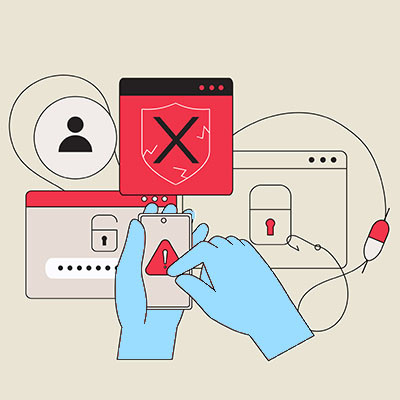
Your business’ computing infrastructure is a pretty resilient system. It has all types of tools added on to keep malicious code, bad actors, and even sabotage from ruining the good thing you have. This reliability has led to hackers changing the way that they go about their business. Nowadays, most of the attacks that affect businesses are phishing attacks. In today’s blog we will go through the elements of a phishing attack and how you can protect your business from them.
Did you know that tomorrow is World Password Day, 2023? As the result of a campaign to spread awareness of the importance of sufficiently secure passwords, it has become an annual reminder of how critical sufficient passwords are to proper cybersecurity…despite passwords not being sufficient protection on their own. In light of tomorrow’s observance, let’s take some time to review why passwords are important to get right, and what else you need to have in place.

This past January, the Federal Bureau of Investigation issued an announcement that they had targeted and taken down the servers for a Dark Web organization responsible for the Hive ransomware group. While there is certainly cause for celebration here, one major statistic is enough reason to continue being concerned.

Has your business been targeted by hackers? Do you even know? Let’s face it, small businesses don’t typically worry all that much about cybersecurity. To many small business owners, they might see it as a luxury for their perceived risk. Unfortunately, the reality of the situation is that hackers and scammers are targeting small businesses more regularly than they have in the past and without some kind of dedicated cybersecurity strategy, there could be a good chance that your business could run into some problems because of it.
While security researchers do their best to find security vulnerabilities in software and systems before they are actively exploited by attackers, they can’t be successful all the time. There are too many threats and too many variables to consider, and zero-day exploits are often discovered well after they are actively being exploited by threats. How can you keep zero-day exploits from impacting your business?

It’s the holiday season, and you know what that means: lots of gift-giving and online shopping. Regardless of what you and your family celebrate this holiday season, you should be prepared to handle the influx of phishing attacks which always surface around this time every year, including both the usual methods and the more sophisticated ones.

For millions of people, the rubber ducky is a benign reminder of childhood. Depending on when you were a child, the rendition of Sesame Street’s Ernie singing “Rubber Duckie, you’re the one,” is ingrained in your mind every time you hear the term. Unfortunately, the Rubber Ducky we are going to tell you about today has only fond recollection for people who are looking to breach networks they aren’t authorized to access or deliver malware payloads that are designed to cause havoc.

It probably isn’t a question you’ve put much thought to, but tell me: who do you think feels the greatest impact from card skimming schemes, where a payment card’s data is captured so a cybercriminal can make use of the card’s associated account? While it isn’t a good situation for anyone, some are impacted more than others.

WhatsApp is one of the world’s most popular messaging applications. With over 2 billion users, WhatsApp is known for its relative security, as it is one of the few messaging applications that offers end-to-end encryption. A modified version of WhatsApp, called YoWhatsApp, has been reportedly deploying malware.
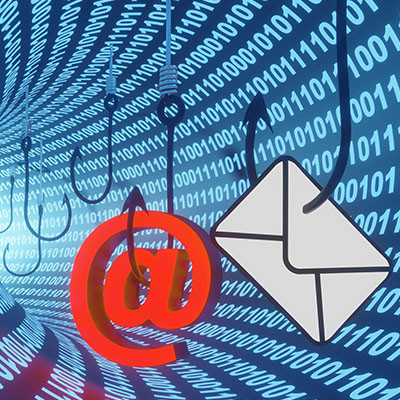
How often do you get emails from individuals claiming to be working with a business who wants to do business with yours or sell you a product, completely unsolicited and even perhaps a bit suspicious? These types of messages can often land small businesses in hot water, as it only takes one phishing email landing in the wrong inbox at the wrong time to put your business in jeopardy.

How quickly do you think it takes for a hacker to react to the disclosure of bugs and vulnerabilities? According to industry experts, the time for security professionals to react to zero-day threats and vulnerabilities might be decreasing. Is your organization prepared to act when important vulnerabilities like these are disclosed?

Anyone who has a mailbox or an email knows all about junk mail. We all receive Publisher’s Clearing House entries, calls about your car’s extended warranty, promotions for items and events that you swore that you discontinued by typing “STOP”, and just needless spam that you waste your time going through and deleting. We receive unsolicited messages every single day.

We understand that cybersecurity can be difficult to think about at times because of the terminology thrown around by industry professionals, but we want to do our part to help clear up some of the confusion. Today, we’re going to discuss the difference between vulnerabilities and exploits, as well as how your organization can do everything it can to ensure that both are minimized on your company network.

If you are a frequent reader of our blog, you know all about phishing scams. They are emails and messages sent that are designed to extort money and gain access to computers and networks for nefarious purposes. The popular IT support company Geek Squad, a subsidiary of Best Buy, is the latest company caught up in such a scam. Let’s take a look at how the scam works and how you can avoid becoming its next victim.
Phishing attacks can be scary to deal with, especially since it is not unheard of for staff members to not even know they are looking at one. To make sure your staff can identify and respond to phishing attacks in an appropriate way, we’ve put together this short guide to help you along the way.
Learn more about what L7 Solutions can do for your business.
L7 Solutions
7890 Peters Road Building G102,
Plantation, Florida 33324