Have any question?
Text or Call (954) 573-1300

Text or Call (954) 573-1300

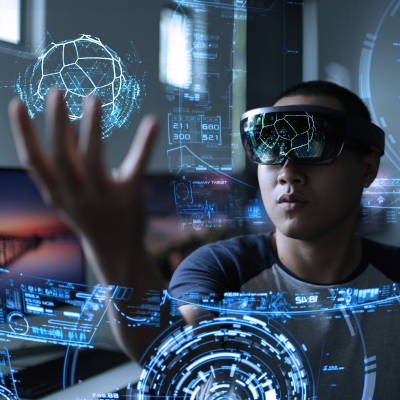
Augmented reality has been one of the most cited emerging technologies for the past few years. It was the technology that was supposed to fuel Google Glass, the failed attempt at creating a pair of revolutionary smart glasses. Since then, there hasn’t been much press about AR in the mainstream media and not much is known about major tech companies’ attempts to improve AR technology.

For most businesses, technology has a major role in what they do. They use it in all manners of ways, but there is no question that it has become a driving force for business. As the calendar flips to a new decade, we thought that it would be good to take a look at what the 2010s brought us, and what to expect in the 2020s.

We typically use this blog to share information about the technology that a business should be leveraging - but in this blog, we’ve decided to focus on a different group that is increasingly reliant on technology: students. As these pupils will someday make up the workforce and almost certainly utilize technology on a daily basis, it is important that their education reflects this increase in their curriculums. Here, we’ll consider some of the effects (good and bad) that this has had.

Without a doubt, the Internet is one of humanity's most impressive inventions. 50 years ago, the predecessor to the Internet that most of the world depends on, called ARPANET, was launched. Today, we will talk about how that innovation turned into the Internet, and reorganized the way people interacted with computing systems.

We hope we aren’t dating ourselves too much by mentioning computer punch cards, but they were once the means of inputting data into a computing device… at least, until the now-ubiquitous mouse and keyboard came into the scene. This variety of interfacing with our devices now seems to be one of the few ways to practically use them. However, other interfaces have emerged - do any of them stand a chance of unseating the keyboard and mouse?

If your business is one that depends on transportation, you know that coordination is extremely important. With consumers’ reliance on a company’s distribution arm, today’s companies are turning old practices on their heads and utilizing a more technology-driven approach to effectively manage their company’s transportation initiatives. This technology is innovating quickly and could mean a major transformation for businesses before too long. Today, we’ll go through three innovations that are working to change how transportation-dependent companies do things.

Technology innovation in the workplace is something that is constantly shifting and changing, depending on what’s hot at any specific time. These days, it might seem like office technology innovation is stagnating, but we assure you that it’s still constantly improving. We’ll walk you through some of our favorites to improve data accessibility and workplace productivity as a whole.

When it comes to innovation, you’d be surprised at what you might be capable of with the right solution. Collaboration in particular opens the floodgates to productivity, and with the right kind of collaborative and innovative technology, you’ll be able to unlock a whole new level of progress for your business. We’ll discuss some of the most important aspects of innovative collaboration and how your business can start taking advantage of it.

If your business uses technology to be more productive and efficient, you know that as soon as you buy a piece of new technology, there is another one right behind it that has more power, or better features. This is true for consumers as well. This constant innovation is what has made technology a viable option for many small businesses. After all, if computers hadn’t been innovated on constantly, they’d still be the size of a room (or wouldn’t exist at all).

For those who don’t know, the term information technology is an encompassment of the technology used in the facilitation of rendering, sharing, and storing data. Any piece of technology that is used to process, keep, send, and secure digital information, is considered IT. Today, we will look at some of the emerging technologies presenting solutions for businesses and individuals, alike, heading into 2019.

Information technology has always been a hotbed for future predictions. Whether it was Marconi’s grand plans for wireless communications or the bold prediction that every person would be carrying around a computer that fits in the palm of their hand, the future always looks bright when new technologies are considered. But, what does the immediate future of information technology hold?

At every turn, it seems as though there’s another best practice or upcoming trend to learn and implement in the realm of business technology. Are you doing all you can to keep your company up to date, relevant, and competitive? Below, we review some of 2018’s biggest IT revolutions so far.

Children are the future, as the saying goes, so do we really want the future to be taught using tools from the past? While some schools are still using technology that better belongs in the 20th century, others are embracing innovation and teaching in ways that better translate to the “real world.” Let’s take a look at how our evolving technology is transforming the classroom and explore some ways to get it to more students.
Humankind has always adapted and improved technology to make life easier, starting all the way back at fire and the wheel. Nowadays, our approach to making life easier through technology is centered around productivity and security - if we can accomplish more than before in the same amount of time, without worrying that it will be stolen, we’re happy.
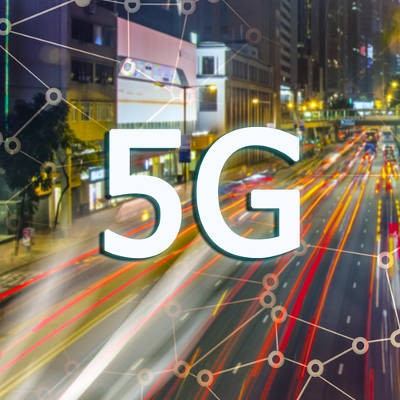
You might see 3G and 4G on your mobile devices and wonder what it all means. If so, we have an answer for you, and just in time for a brand-new iteration: 5G. With this new technology on its way, it’s time to take a look at what exactly 5G should be capable of, and how it can differentiate itself from its predecessors.

At the International Consumer Electronics Show (CES), new products (and the technologies that fuel those products) are put on display to give industry professionals a look to see what companies are working on. At CES 2018, held in Las Vegas, Band and Olufsen introduced their speakers-as-art-concept, Samsung unveiled a 146” television that is designed to take up a wall, and many companies, including Aura, introduced new smart home security products that are sure to get an intruder’s attention (over Wi-Fi).

Data storage is such an important part of today’s business environment, but when was the last time you took the time to consider technologies that came before? Technology that exists today couldn’t possibly have existed 50, or even 20 years ago. How have the leaps and bounds made in the tech industry affected the status of data storage, and what does this trend mean for small and medium-sized businesses?

Every time that you purchase a new piece of business technology, you’re faced with a choice: go with a product that’s been around for awhile, and thus, is cheaper, or pay a little extra for the latest solution. We like to encourage business owners to go with the latest tech because it saves them money in the long run - an IT concept known as “future proofing.”
 Your business’s wireless Internet connection is one of its most valuable assets, and without it, your operations would surely suffer. Your wireless technology, like smartphones, tablets, laptops, and even your network depend on it in order to function properly. WiFi is known to be pretty inconvenient at times due to questionable connections and security, but a new technology wants to change all of that: Li-Fi, wireless Internet connections delivered by special light bulbs.
 In 1965, the technological landscape was much different from what we see now. The idea of having a small computer in your pocket in the form of a smartphone was but a distant dream. Now, it’s commonplace for all but the youngest of children to have a smartphone. How is this possible? Well, it’s all thanks to Moore’s law, which has led the development of new technology for the past 50 years.
Learn more about what L7 Solutions can do for your business.
L7 Solutions
7890 Peters Road Building G102,
Plantation, Florida 33324