Have any question?
Text or Call (954) 573-1300

Text or Call (954) 573-1300


A new email scam is making its rounds and it has a lot of people concerned with just how much a hacker can peer into one’s private life. How would you react if a stranger emailed you saying they had inappropriate webcam footage of you?
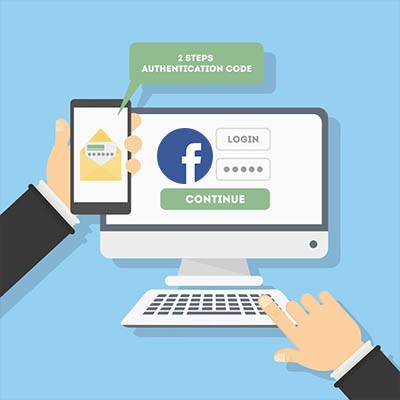
If you use Facebook, you likely have a lot of personal information stored there. If you use it for your business, then your professional reputation also partially relies on what you put into the social network. If you aren’t protecting your Facebook account, you could be at risk for identity theft or worse. That’s why using two-factor authentication on your social media accounts is becoming more important than ever.

The Internet of Things means a lot more than just enhanced connectivity. In particular, you’ll have a considerable security risk associated with the Internet of Things. It’s clear that the more devices accessing a network, the more risk will be associated with that network, which is where the inherent risk of the Internet of Things comes into play. How can you control the number of devices accessing your network, and thus secure your business from the Internet of Things?

There’s a big risk associated with implementing any new technology solution for your organization. For one, it’s difficult to know how a specific solution will run without first implementing it. This leads many businesses to avoid implementing a new solution for fear that it won’t be worth the investment. On the other hand, if they fail to implement a new solution, they could potentially lose out on valuable new tools they could use to succeed. How can you get around this issue?
It’s been about a year and a half since the Meltdown and Spectre exploits became publicly known. While patches and updates were administered to reduce their threat, they continue to linger on in a less serious capacity. Of course, this doesn’t mean that the threat has entirely been neutered--you still want to know what these threats do and whether or not you’re safe from them.

One of the inevitabilities of working with the cloud is that you have to face a tough question; what kind of compliance requirements are there for cloud-based data? If you’re storing data for your business in a cloud-based environment, it becomes your responsibility to know where and how this data is stored--particularly if you’re not the one doing the actual cloud hosting. How do you maintain compliance when you seemingly have so little control over how your computing platform is managed and maintained?

Social media has been an emerging technology in recent years, and has produced many threats. Hackers have learned that they can take advantage of these communication mediums to launch dangerous new attacks on unsuspecting users. With enough ingenuity on a hacker’s part, they can potentially steal the identity of a social media user. Here are some of the best ways that your organization can combat identity theft through social media.

Email is a modern classic as far as business solutions are concerned, and you’d be hard-pressed to find an office that didn’t use it in some capacity or another. However, because email is so popular, it has become a favorite attack vector of malicious users. Fortunately, there are some basic practices that will help keep your email account secure and your communications private.

Ransomware doesn’t discriminate with its targets, as the city of Atlanta, Georgia now knows so painfully well. The city became the target of a ransomware attack that crippled many of its critical system workflows. The municipal government suffered from one of the most advanced and sustained attacks in recent memory.

Smartphones are the predominant mode of communication, as well as now being the devices most used to access the Internet. With so much depending on the modern smartphone, it has become one of the largest, and most competitive, markets of any consumer item. As a result, manufacturers are building devices with software that is able to encrypt the phone against unauthorized access.

There is no understating the importance of strong, reliable passwords to your organization’s network security, especially to protect its wireless connection. However, this can create some friction with your staff when they try to connect to Wi-Fi using their mobile device. To make accessing the Internet easier, scannable QR codes can be used to connect to the Internet.

This guide was created so that business owners, office managers, and IT departments can provide it as an educational resource to showcase some of the most basic IT security practices that can be implemented in your workplace. We recommend printing this out and handing it out to your staff for maximum results.

Ransomware is a growing problem for businesses, being one of the most difficult threats to remove from an infrastructure. Not only is it easy to spread, but difficult to avoid as a whole. How can your organization prepare for this threat? It starts by being mindful of how ransomware is spread and how your employees react to it, both now and in the future.

Mobile devices are so common nowadays that you’ll likely encounter your employees bringing multiple devices to the office on a regular basis. Little do they know that everything they bring with them, from their Fitbit to their laptop, poses a security threat. Of course, the threat level from each individual device will depend on what it is exactly, but the point stands that the less you do about mobile device security now, the more danger your organization will be in down the road.

The unfortunate truth of increased technology use in the workplace is that there is a corresponding increase in the potential for cybercrime, more specifically identity theft, to strike the workplace. The question is, what can you do to help prevent it, and how should you react to it should it strike?

As cybercriminals become increasingly sophisticated in their methods of attack, it is important that your staff--the ones on the front lines--are educated to spot these attempts and know what to do if one is encountered. In order to spot these attacks, it is important to know what to look for.

Put yourself in the shoes of a cybercriminal. If you were to launch a ransomware attack, who would be your target? Would you launch an indiscriminate attack to try to snare as many as you could, or would you narrow your focus to be more selective? As it happens, real-life cybercriminals have largely made the shift to targeted, relatively tiny, ransomware attacks.

2FA, or two-factor authentication, is a simple and effective means of boosting your cybersecurity. Despite this, a study performed by Duo Labs suggests that 2FA has not been adopted as much as one might expect, or as much as it should be.

Android is a very common operating system on mobile devices around the world, and because of this, you won’t be surprised to hear that hackers are always trying to one-up security developers. If your business takes advantage of Android devices like smartphones or tablets, you’ll want to consider these 11 security tips that will help keep your organization safe.

The holidays are a time filled with good food, visits from dear friends and family, and exchanging gifts with those you care about. However, to keep the season bright and merry, you need to be a little cautious during your next gift exchange, as many gifts can present some unexpected risks to your recipient’s security. Be mindful if you see the following items on someone’s wish list.
Learn more about what L7 Solutions can do for your business.
L7 Solutions
7890 Peters Road Building G102,
Plantation, Florida 33324