Have any question?
Text or Call (954) 573-1300

Text or Call (954) 573-1300

Business security is a common issue for many small organizations with limited budgets, but it doesn’t have to be an issue. We’re here to help you master the seemingly endless threats and security problems that major vulnerabilities present to the small business environment, and it all starts out by understanding how even basic security solutions protect your organization.
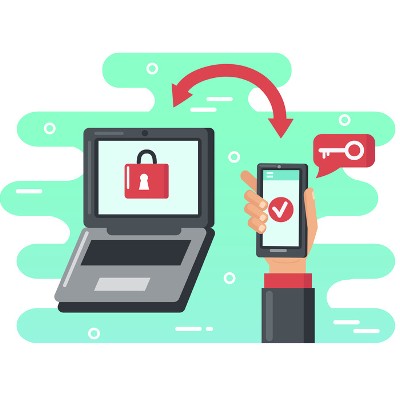
You’re lucky to go a month without seeing news of some devastating data breach. With more businesses gearing up for the worst, what are you doing to protect your organization’s intellectual property and sensitive data? You can start by implementing a new type of authentication system that’s much more secure than your current security strategy--two-factor authentication.

Physical security is more or less what it sounds like: security intended to protect the physical infrastructure that houses your business and your critical data. Many of the pieces of physical security will seem very familiar, even if you didn’t know the right terms for them.

You might be surprised by how many of your organization’s security issues originate from within. A major contributor is user error, which can lead to some pretty severe problems reaching from your data security, to your workflow, all the way to the continuation of your business itself.

Students generally love it when classes are cancelled for whatever reason, but thanks to a cybercriminal group called TheDarkOverlord Solutions, a school in Flathead Valley, Montana was disrupted for an extended period of time. This downtime resulted in a disruption of operations for over 30 schools, as well as the threat to the personal information of countless teachers, students, and administrators due to a ransomware attack.

Considering that since January 1st of this year, there has been upwards of 10 million personal information records lost or stolen each day, odds are that you, or someone you know, has had their records compromised by a data breach. With such a high incident rate, individuals and businesses that have never received any kind of notification that their records were included in a breach, generally consider themselves lucky and assume that they are not at risk of identity theft or unauthorized account usage. Unfortunately for them, that is not always the case.

If you run a small business, you might consider yourself a small target of hacking attacks. It might make sense to think of it in this way, but this actually is not advisable to think of it in this way. According to a recent survey by CNBC and SurveyMonkey, only two percent of small businesses see cyber attacks as anything worth worrying about. This leads us to the next question… are you one of them?

Data security, always an important topic, has been made even more urgent by the Equifax data breach and the fact that 143 million users had their personal information stolen after entrusting it (or not) to Equifax. You need to consider what would happen if your business were on the receiving end of a data breach, and prepare to handle this truly unpleasant circumstance.

Dealing with disasters are a part of doing business. You know how difficult it is to recover from a devastating flood or storm. While businesses tend to suffer from these situations, countless individuals suffer every time a natural disaster hits. Just take a look at the United States in recent weeks. Even though you may want to donate to people suffering from hurricanes, there are illegitimate charities out there that want to make a quick buck off of your generosity.

About two and a half years ago, Lenovo was brought under fire for manufacturing products that had adware preinstalled on them. This malware, a variant called Superfish, was installed on up to 750,000 Lenovo devices, and the company--eager to put this incident behind them--still refuses to admit fault, despite paying reparations and other fees as a result. Superfish allowed access to sensitive information and a root certificate, which could be used to access encrypted data on the same network. All in all, it was a rather embarrassing and dangerous scenario for Lenovo, and it comes with its fair share of consequences.

When it comes to Internet threats, ransomware is the one that causes the most fear, especially for small and medium-sized businesses, as it should. According to the Cisco 2017 Annual Cybersecurity Report, ransomware is growing at a yearly rate of 350%. It’s time to make sure that you’re doing what you can to stop your business from becoming another ransomware statistic. Here’s five very good tips that will help you avoid becoming a victim of the next big ransomware attack!

Network security is an important part of keeping both your business and your staff away from online threats, but it’s not enough to implement the best, most comprehensive solutions on the market. There are a surprising number of facets to network security, and in order to optimize protection against online threats, you’ll need to know all of them. Thankfully, you don’t have to do this alone.

When a hacker tries to infiltrate your network, they are doing so with a purpose in mind. Usually they are looking for specific information, like account credentials, personal information, or files that can be used to blackmail victims. Regardless, we’ll go over what a hacker can do with the information that they collect from you, and how you can best protect it from them.

Your IT is a central part of your organization’s operations, but its role has changed significantly as business processes have grown more streamlined. There are always shifts and changes in the way that businesses function which must be accounted for, especially in the modern office environment. How have these shifts affected your business’s IT management?

Security best practices demand that a workstation should never be left unlocked. However, it can be really tempting to leave it unlocked if you only plan on stepping away for a moment--but unfortunately, that moment can easily turn into many if you are distracted from your task. Fortunately, there is now a fix that relies on the one device most of us are never without: our phones.

Everyone has a right to privacy. However, with the popularity of social networks, the Internet is a very hard place to remain a private individual. Digital communication is everywhere. Cybercrime has become a fairly regular event. This week’s tip of the week takes a glance at three websites that you can use to help enforce your right to privacy.

It doesn’t matter if you’re a small business, a large enterprise, or if you're in a rural town, or a larger city. You still have to worry about the security of your data and the integrity of your infrastructure. Thankfully, there are services out there that allow even small businesses to leverage powerful, enterprise-level tools for maximum network security. The most valuable of all is perhaps the Unified Threat Management (UTM) tool.

Putting together your workforce is something that requires painstaking attention to detail. You found workers who are willing to work as hard as possible to further your organization’s goals. Yet, you have to remember that even the most perfect employees are still human, and that they can make mistakes and can put the organization’s data at risk. User error is a common problem, and it is one of the most important things to keep in mind while you set up your information systems.

Phishing attacks have been around for decades, first being recorded in 1995 where scammers would pose as AOL employees and request a user’s billing information through instant messages. Nowadays, email phishing attempts have tricked users into handing over personal information of all kinds. There are many methods of identifying a phishing attempt, but today we’ll focus on one.

Security is one of the most crucial pain points of all businesses, but sometimes it can be tricky to implement solutions if you’re not sure what you specifically need. Network security isn’t easy, but it doesn’t necessarily have to be hard. If you have difficulty reinforcing a security state of mind in your office, we have good news for you; by keeping these tips in mind, you’ll be able to keep your business more secure than it would be otherwise.
Learn more about what L7 Solutions can do for your business.
L7 Solutions
7890 Peters Road Building G102,
Plantation, Florida 33324