Have any question?
Text or Call (954) 573-1300

Text or Call (954) 573-1300


There is a dangerous phrase that often precedes a crisis: “...But it is still working fine.”
Viewing technology as a one-time purchase or a fix-it-when-it-breaks utility is a recipe for stagnation. If you are not consistently investing in your digital infrastructure, you are not just standing still; you are falling behind. This lack of movement creates a widening gap between your capabilities and the expectations of the people that depend on your business.

Nowadays, technology isn't just a tool in the background, it is the heart of how you make money and serve customers. However, as things like AI and cloud storage become easier to buy, it also becomes easier to make expensive mistakes.
Here is a guide to the five biggest technology traps businesses are falling into right now and how you can stay safe.

Most business owners view their IT the same way they view their utilities: they only notice it when the connection drops or a system fails. However, in an era where your digital infrastructure is the backbone of your entire operation, waiting for something to break before you address it is risky.

Silence is rarely golden—it’s usually a warning sign. Imagine flying a plane through a storm with a blindfold on; that’s exactly what it feels like to run a modern enterprise without a robust monitoring strategy. Whether you're scaling a global cloud infrastructure or managing a delicate web of customer data, reporting and alarms are the digital nervous system that keeps your operation alive. They are the difference between discovering a system failure via a frantic 2 a.m. client call and catching a glitch before it ever touches a customer.

Is your office still housing a server closet? If so, you’re likely sitting on the most expensive, non-productive square footage in your building. Between the specialized cooling costs, the constant hardware maintenance, and the looming threat of mechanical failure, physical servers have become an expensive anchor for the modern business.
Forward-thinking companies are ditching the hardware in favor of the cloud—a solution that eliminates your physical footprint while maximizing your agility.
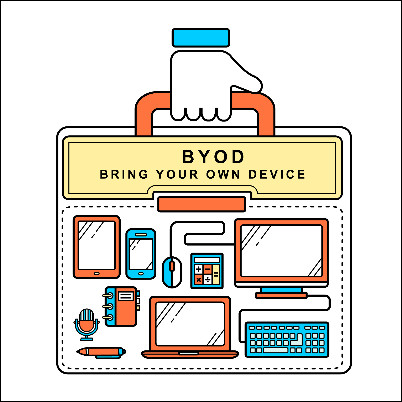
The dream of a company-only device policy died about five minutes after the first smartphone hit the market. Whether you officially allow it or not, your team is likely checking Slack from their sofas and answering emails in the grocery line on their personal phones.
Bring Your Own Device (BYOD) is no longer a perk; it’s the standard. But without a solid strategy, it’s also a security nightmare waiting to happen. Here is how to embrace the flexibility of BYOD without handing the keys to your kingdom to every malware-laden app on the app store.

Every business owner knows that a new hire’s first few weeks set the tone for their entire career with the company. While you’re busy teaching them the ropes of their new role, there is something else just as vital to cover: keeping your company data safe.
Building a security-first culture doesn’t have to be intimidating. Here is how to navigate the first 30 days to ensure your new team members start off on the right foot.

The pace of technology hasn't just increased; it has fundamentally changed how we interact with the world. We are no longer just using computers; we are collaborating with autonomous agents and managing vast digital ecosystems.
To help you stay ahead of the curve, here are four essential technology tips to boost your productivity, secure your data, and protect your mental well-being this year.

If you’re a business owner, you likely view IT as a necessary evil. It’s that line item on your profit and loss report that feels like a black hole; money goes in, and occasionally, your printer still doesn’t work.
The hard truth is that if you are still calling a tech person only when things break, you are paying a hidden tax on your own growth.

The short answer for why your login needs to be more complex is that hackers leveled up.
While the ongoing development of quantum computing is a real threat—since it’s capable of testing nearly infinite keys simultaneously—you do not need a supercomputer to break a weak password today. A modern graphics card, the kind found in a standard gaming PC, can shred a basic 8-character password in under sixty seconds. If a hobbyist can do it, imagine what a professional syndicate can do.

You’ve seen the demos. Dashboards filled with green bars, heatmaps of employee activity, and productivity scores that promise to tell you exactly who is working and who is watching Netflix.
To you, it’s monitoring: A way to protect your assets and ensure you’re getting what you pay for. To your team, it’s spying: a digital leash that says, "I don’t trust you to do the job I hired you for."
Security can be challenging, even when you have the requisite protections in place. Passwords are too easy to forget, and a fob or token can be misplaced. One thing that’s a lot harder to forget or lose, however: your fingerprint.
Why not take advantage of what you and your entire team inherently possess to help protect your business? Let’s dive into how biometrics—who you are—is quickly overtaking “what you know.”
Most small business owners don't wake up thinking about network patches or endpoint detection. You’re focused on growth, your team, and your customers. Unfortunately, there is a persistent myth that “small” means “invisible” to hackers.
The reality isn't that hackers are out to get you specifically; it’s that they use automated tools to find any open door. If your door is unlocked, they’ll walk in. It’s not personal—it’s just a math problem for them.

Toys are an essential part of our development as people, whether you’re talking about baby toys that teach color recognition and empathy, collaborative toys that teach sharing and teamwork, or creative toys that encourage imagination and outside-the-box thinking. Just imagine what the toys of the future will be able to accomplish… assuming, of course, that the security issues we’re currently wrestling with are dealt with appropriately.
Unfortunately, this hurdle still needs work to be cleared.

In every office, there is a hero. They are the ones who clear their inbox before they leave, manage five Slack threads simultaneously, and pride themselves on a five-minute response time. We value these people because they make things happen. Unfortunately, that same high-speed, can-do attitude is exactly what hackers are looking for.

With a vulnerability appearing on the scene, we felt it was an appropriate time to peel back the curtain on a technology we all use daily but rarely question: Bluetooth. Given the nickname of King Harald Gormsson, who famously united disparate Scandinavian tribes back in the 10th century, the technology unites our headphones, mice, and keyboards. Unfortunately, even the strongest alliances have their weak points.

One question businesses have been asking over the past couple of years is: “Is crypto a viable payment system?” With the maturity of digital asset markets and the rise of regulated stablecoins, the landscape is more professional than any time in the past, but still carries with it substantial risks. If you are considering adding digital assets to your checkout or B2B payment flow, here is the current breakdown of the pros and cons.

As your business has grown, have you fallen into the tech trap of DIY IT solutions? While you might have started with just a handful of employees, the infrastructure you’ve built is no longer sustainable or reliable. You need professional help if you want your business to stay competitive, and we have just the thing for you.

Can your team recall what you discussed during your last mandatory cybersecurity training session? We doubt it, and not because you did a bad job (we’re sure you did an excellent job on that PowerPoint, champ). It’s just that small business security training is far from engaging by default, and it’s seen as more of a requirement than anything else. If you want to shift this “annual compliance” perspective, you’ll have to make some changes, and fast.
Do you actually know which of your coworkers is one click away from getting the whole company hacked? It’s surprisingly easy to get into a business’ IT system. All it takes is one person falling for a fake email, downloading a sketchy file, or giving up their password to a scammer.
If you aren't testing your team, you’re basically just waiting for a disaster to happen. Here is why simulated phishing tests—sending out fake scam emails—are actually a great way to protect your business.
Learn more about what L7 Solutions can do for your business.
L7 Solutions
7890 Peters Road Building G102,
Plantation, Florida 33324